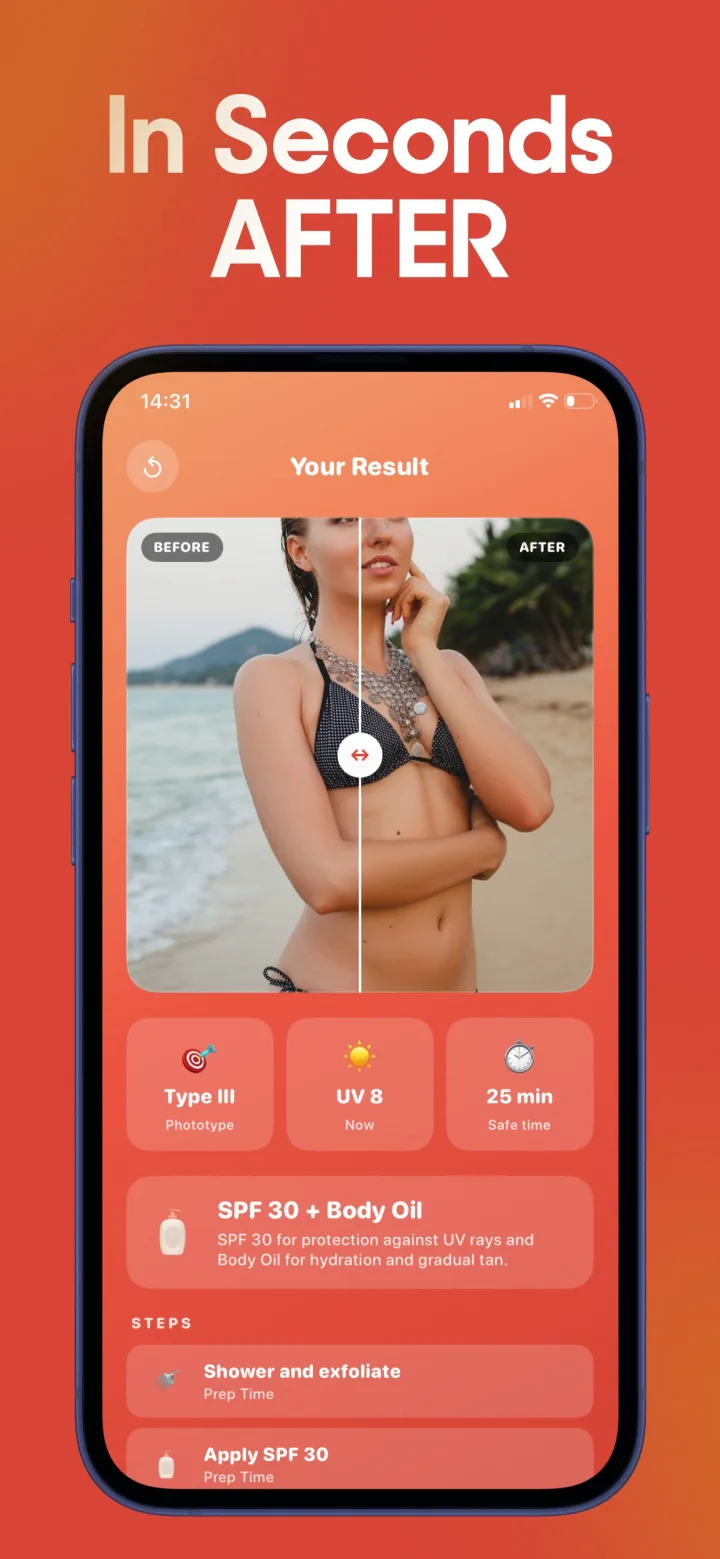
The honest, dermatological answer is that any tan from UV exposure represents some degree of skin cell damage — a tan is the visible sign of that damage response, not a damage-free cosmetic effect.
What 'safer' actually means in this context
Rather than 'safe' in an absolute sense, the more accurate framing is minimizing damage and burn risk — proper SPF, UV-aware timing, and avoiding burning specifically are meaningfully lower-risk than unprotected, uncalculated exposure.
Why sunless (self-tanning) products are the actual zero-UV option
Sunless tanning products that use DHA to darken the skin's surface layer, without any UV exposure at all, are the only route to visible tan color with no associated UV damage — worth considering as a genuinely lower-risk alternative for anyone prioritizing that.
The realistic goal for sun-based tanning
If choosing sun exposure specifically, the realistic goal is minimizing damage — avoiding burns entirely, using proper SPF, and respecting calculated safe exposure times — rather than pursuing a fully damage-free outcome that isn't actually available from UV exposure.
Are tanning beds a safer alternative to sun exposure?
No — tanning beds use concentrated UV radiation and are classified as a known carcinogen by major health authorities; they're generally considered higher-risk than moderate, protected outdoor sun exposure, not a safer alternative.