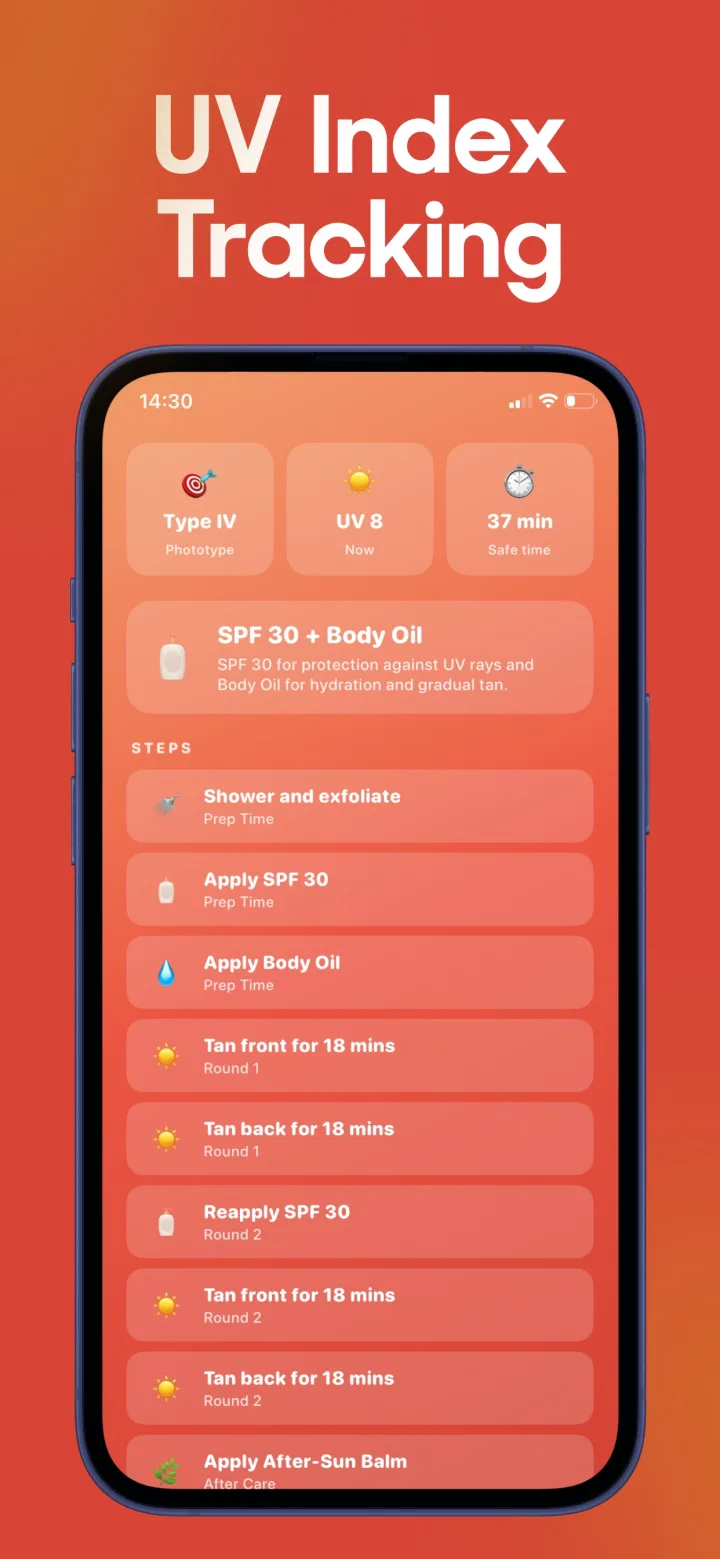
The UV Index is a standardized 0-11+ scale representing the strength of UV radiation at a given time and place — developed jointly by the WHO and the World Meteorological Organization specifically to give the public a simple, comparable daily number.
What goes into the number
The calculation factors in the sun's angle (time of day, season, latitude), ozone layer thickness, altitude, and cloud cover — a genuinely physics-based measurement, not a rough estimate.
Why it's not just 'how sunny it looks'
UV Index can be surprisingly high on a hazy or partly cloudy day, since cloud cover doesn't block UV as effectively as it blocks visible light — the number, not visual brightness, is the reliable guide.
Where the data comes from
Modern weather services (including Apple's WeatherKit) pull from satellite ozone data and atmospheric models to generate location-specific UV forecasts, updated throughout the day as conditions change.
Does UV Index predict actual sunburn risk directly?
It's a strong proxy — combined with your skin type's baseline sensitivity, UV Index is the basis for calculating safe exposure time, which is a more direct and personalized risk estimate than the raw UV number alone.